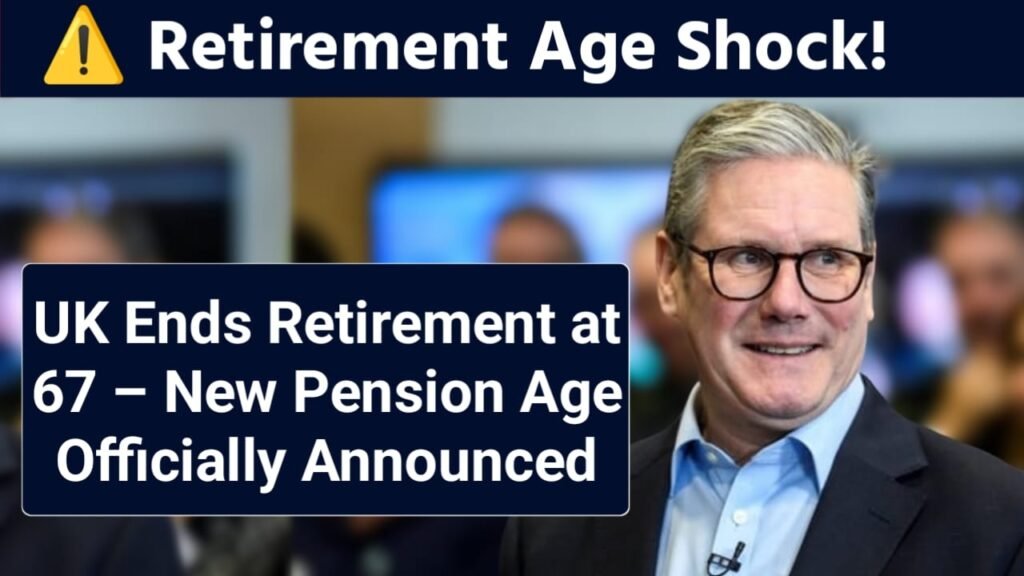
Hello Everyone, The UK Government has officially confirmed a change to the State Pension age, a decision that will affect millions of workers across England, Scotland, Wales, and Northern Ireland. This announcement has been long anticipated, especially by those approaching retirement who have been carefully planning their finances. The confirmation brings clarity after months of speculation and public debate. For many households, this update will influence not only retirement timing but also savings strategies, employment plans, and long-term financial security across the UK.
What Has Officially Changed
The confirmed update relates to the age at which individuals become eligible to receive the UK State Pension. The government has stated that the change will be introduced gradually, rather than all at once, to reduce sudden disruption. This approach is intended to give people enough time to adjust their retirement expectations. While the announcement may feel unsettling for some, officials argue that the decision reflects changing life expectancy and economic pressures faced by the country.
Why the Government Made This Decision
The government has explained that rising life expectancy and increasing pressure on public finances played a key role in the decision. As people live longer, the cost of funding pensions continues to rise, placing strain on the system. Ministers believe adjusting the retirement age is necessary to keep the State Pension sustainable for future generations. The move is presented as a long-term measure rather than a short-term saving, aimed at protecting the pension system rather than weakening it.
Transition to Age 67: Phased Rollout Starting April 2026
The confirmed schedule marks 6 April 2026 as a pivotal date, as the State Pension age begins its legislated rise from 66 to 67. This transition will be phased over two years, completing by 2028. Specifically, individuals born between 6 April 1960 and 5 March 1961 will see their pension age increase to 66 years and a specified number of months, depending on their exact birth date. For those born on or after 6 April 1961, the new standard eligibility age will be 67. To support this shift, the DWP has enhanced its online “State Pension Forecast” tool, allowing workers to see their exact retirement date and projected weekly payment, which is also set to rise by 4.8% in April 2026 under the triple-lock guarantee.
Who Will Be Affected Most
Not everyone will feel the impact at the same time. The change mainly affects people who are currently in their late 40s and 50s, particularly those who had expected to retire within the next decade. Younger workers will also be affected, but they have more time to adapt their plans. For those close to retirement, the announcement may require reassessing employment options, workplace pensions, and personal savings to bridge any potential gap.
Key Points Announced by the Government
Under the official statement, several important details were highlighted to help the public understand how the change will work in practice. These points are crucial for anyone planning their retirement in the UK.
- The pension age change will be phased in gradually
- Existing pension payments will not be reduced
- Private and workplace pensions are not directly affected
- Advance notice will be given before each stage begins
These clarifications aim to reduce confusion and prevent unnecessary panic.
Impact on Retirement Planning
This announcement makes retirement planning more important than ever. Many people may need to work longer than originally planned, either full-time or part-time. Others may choose to increase contributions to private pensions or savings accounts. Financial advisers across the UK are already urging individuals to review their retirement plans carefully. Even small adjustments made now can significantly reduce financial stress later, especially for those nearing the new pension age threshold.
What It Means for Current Pensioners
For those already receiving the State Pension, the government has confirmed that there will be no changes to current payments. This reassurance is particularly important for pensioners who rely heavily on this income for daily living costs. The update strictly applies to future eligibility, not existing claims. As a result, current pensioners can continue to budget and plan with confidence, knowing their pension entitlement remains secure under the new policy framework.
Timeline and Implementation
The government has emphasised that the change will not happen overnight. Instead, it will be introduced in stages over several years. This phased approach is designed to give individuals and employers time to adapt. Employers may need to adjust workforce planning, while individuals can reconsider retirement dates. Official notices and updated guidance will be issued well in advance, ensuring people have clear information before any changes directly affect them.
How Workers Can Prepare
Preparing early is the best way to reduce the impact of this change. Workers are encouraged to stay informed and actively manage their retirement plans rather than waiting until the last moment.
- Review your State Pension forecast regularly
- Check workplace and private pension contributions
- Consider flexible or phased retirement options
- Seek professional financial advice if unsure
Taking these steps can help maintain financial stability despite the updated pension age.
Public Reaction Across the UK
Public reaction to the announcement has been mixed. Some people understand the financial reasoning behind the decision, while others feel frustrated after years of planning around previous pension ages. Trade unions and advocacy groups have called for additional support for those in physically demanding jobs. Meanwhile, the government maintains that balancing fairness with economic reality is essential. The debate highlights how deeply personal and impactful pension policy is for UK citizens.
Long-Term Outlook for State Pensions
Looking ahead, the government has suggested that regular reviews of the pension age will continue. This means further adjustments are possible in the future, depending on economic conditions and life expectancy trends. While this creates uncertainty, officials argue that transparency and early communication will remain priorities. For individuals, the key takeaway is to treat retirement planning as an ongoing process rather than a fixed destination.
Conclusion
The confirmation of a new UK retirement age marks a significant shift in pension policy, affecting how millions plan their future. While the change may feel challenging, it also provides clarity after long uncertainty. By staying informed, reviewing finances, and adapting plans early, individuals can manage the transition more smoothly. The government’s phased approach and assurances for current pensioners offer some stability, but proactive planning will remain essential for anyone working towards retirement in the UK.
Disclaimer: This article is for general information purposes only and does not constitute financial or legal advice. Pension rules and eligibility can change, and individual circumstances vary. Readers are advised to check official UK Government sources or consult a qualified financial adviser before making retirement or pension-related decisions.